
Looking back at House’s Barbershop
Capturing the essence of a Harlem institution
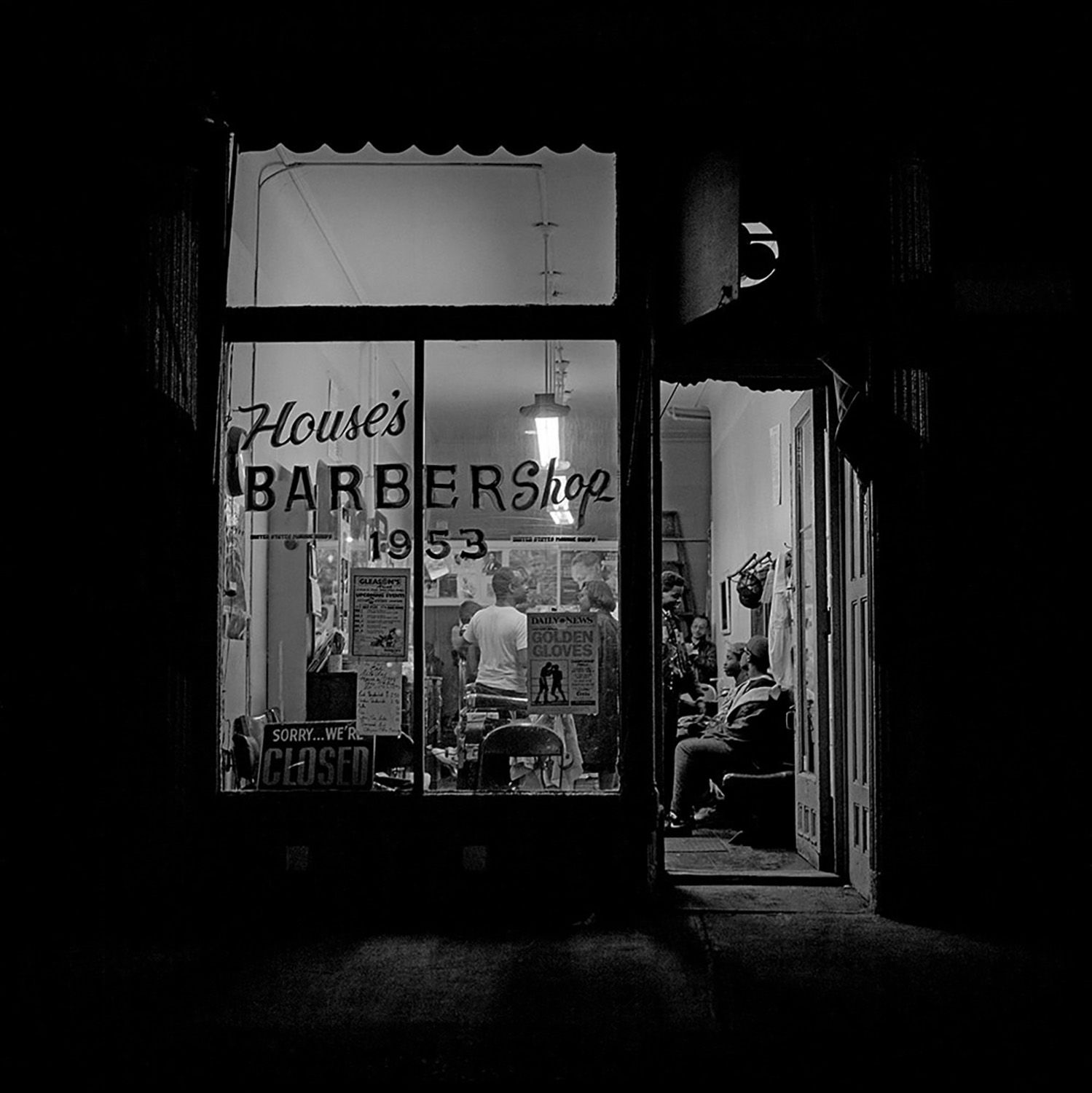


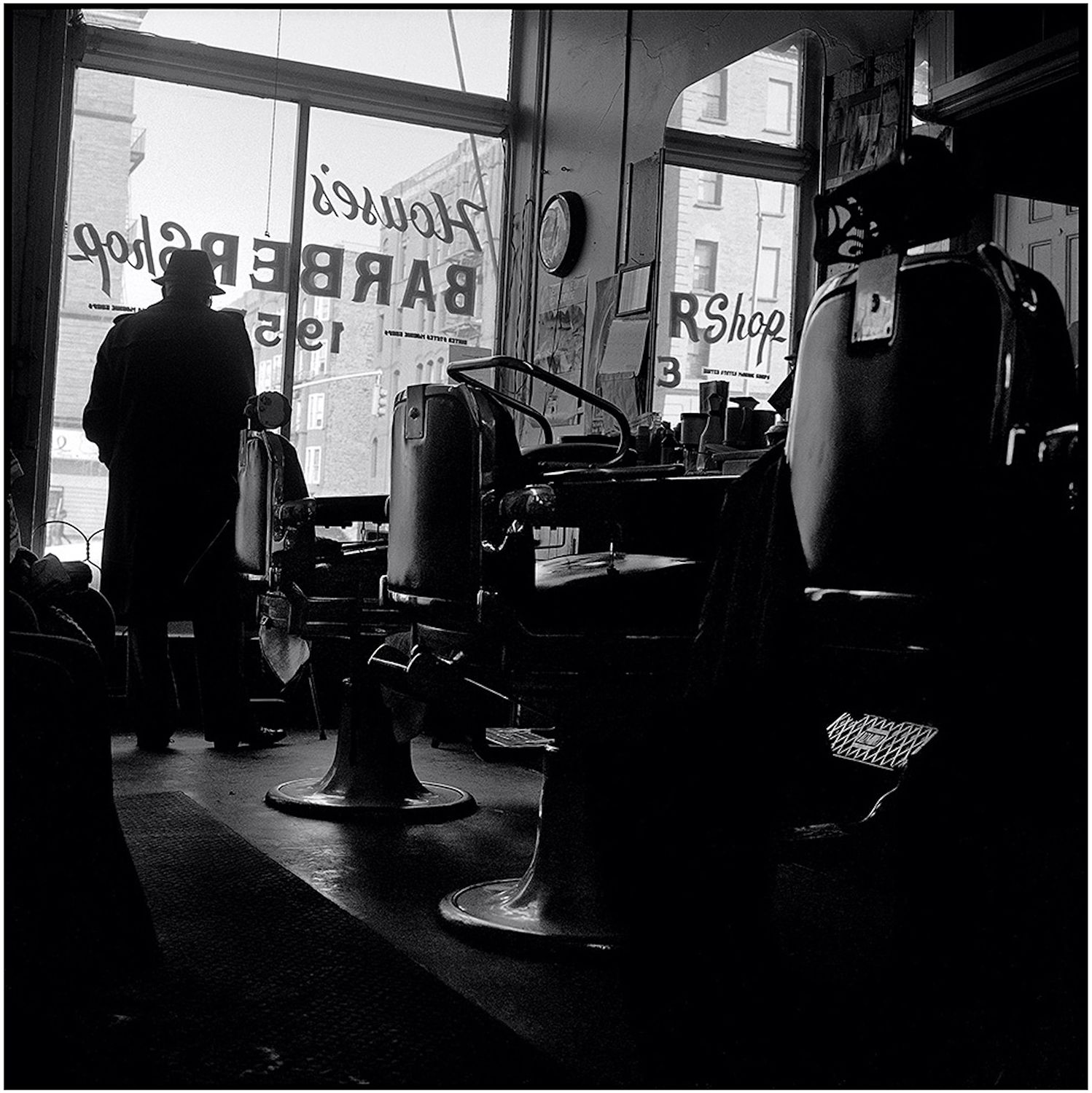

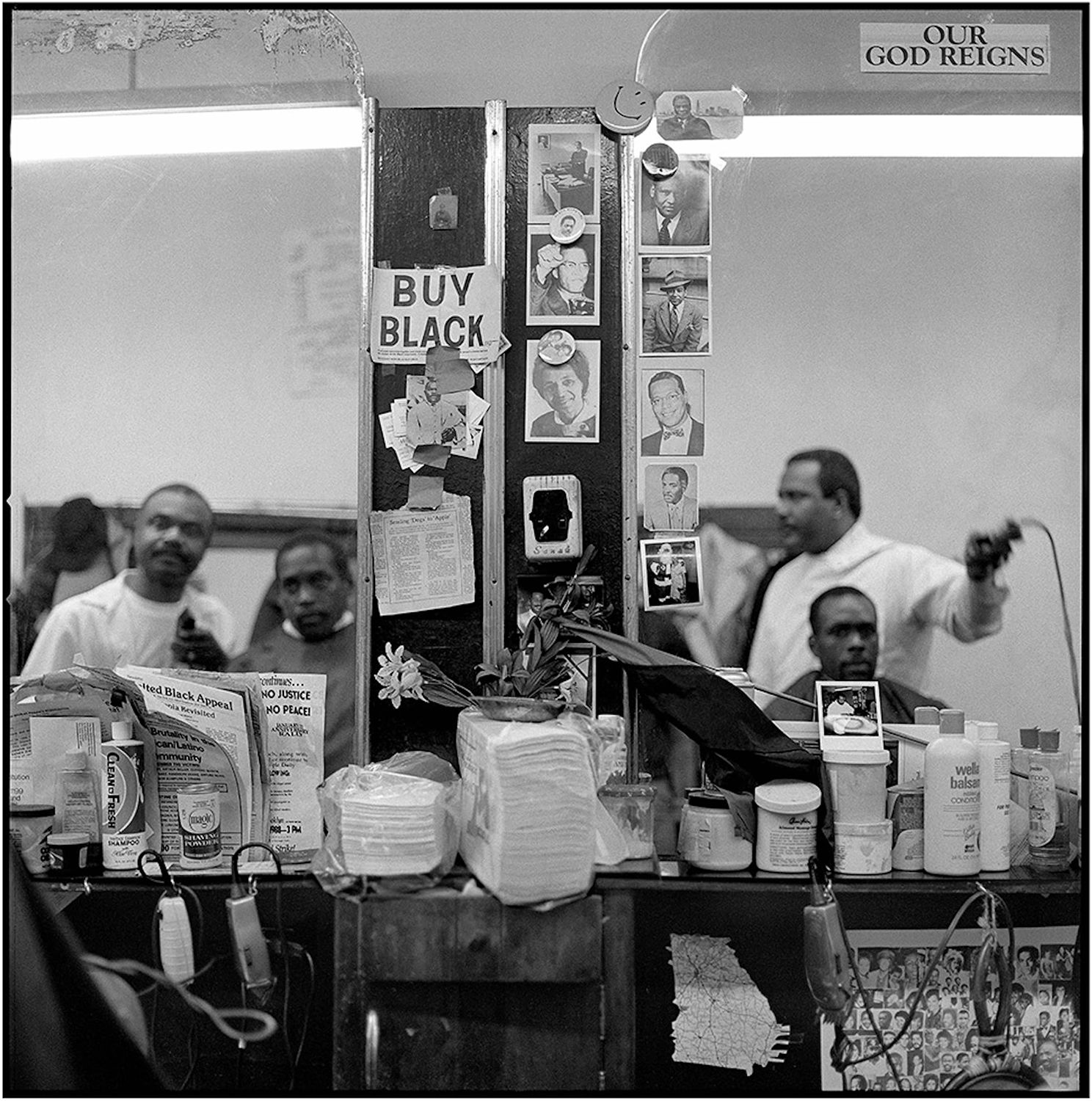

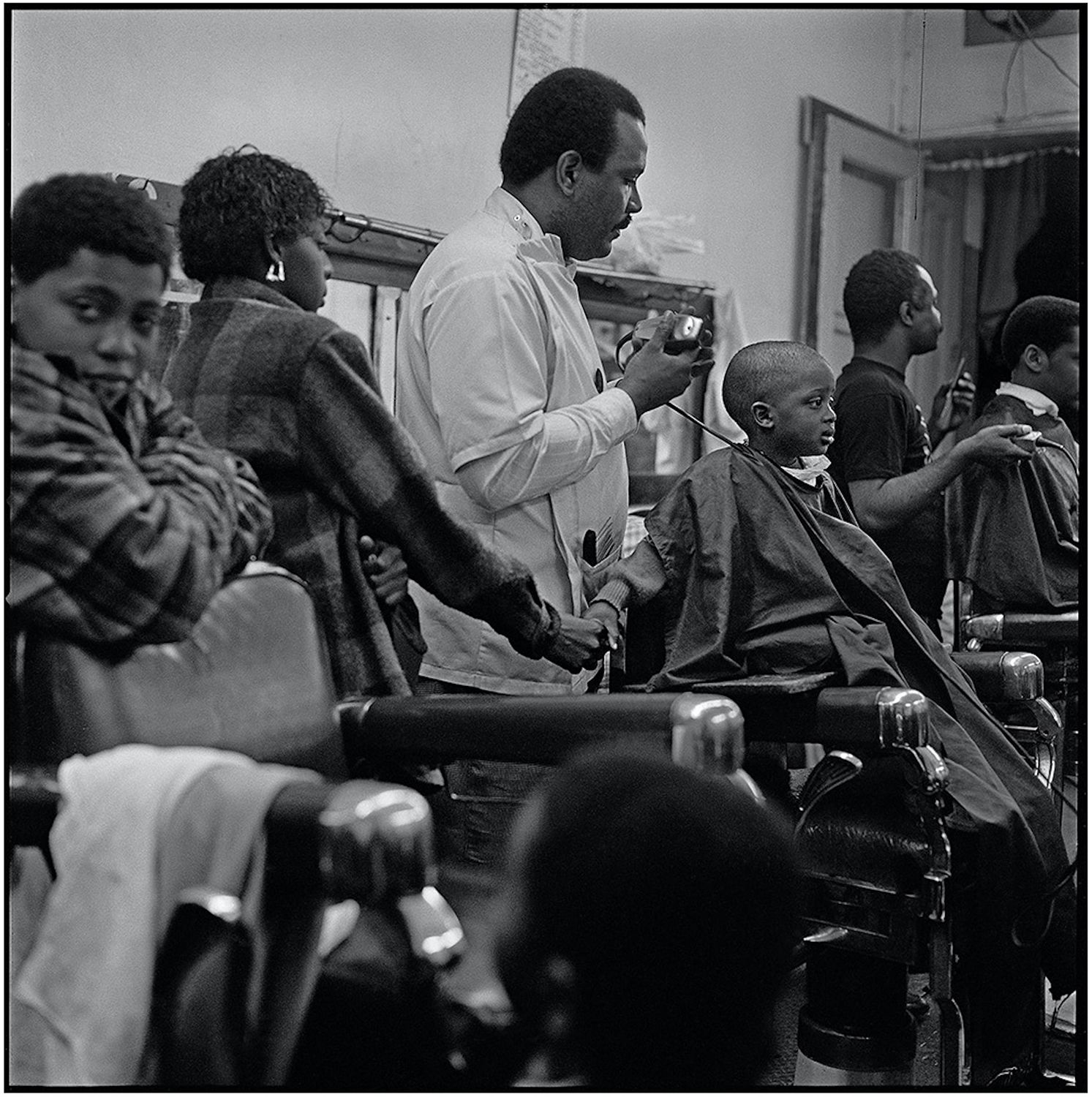

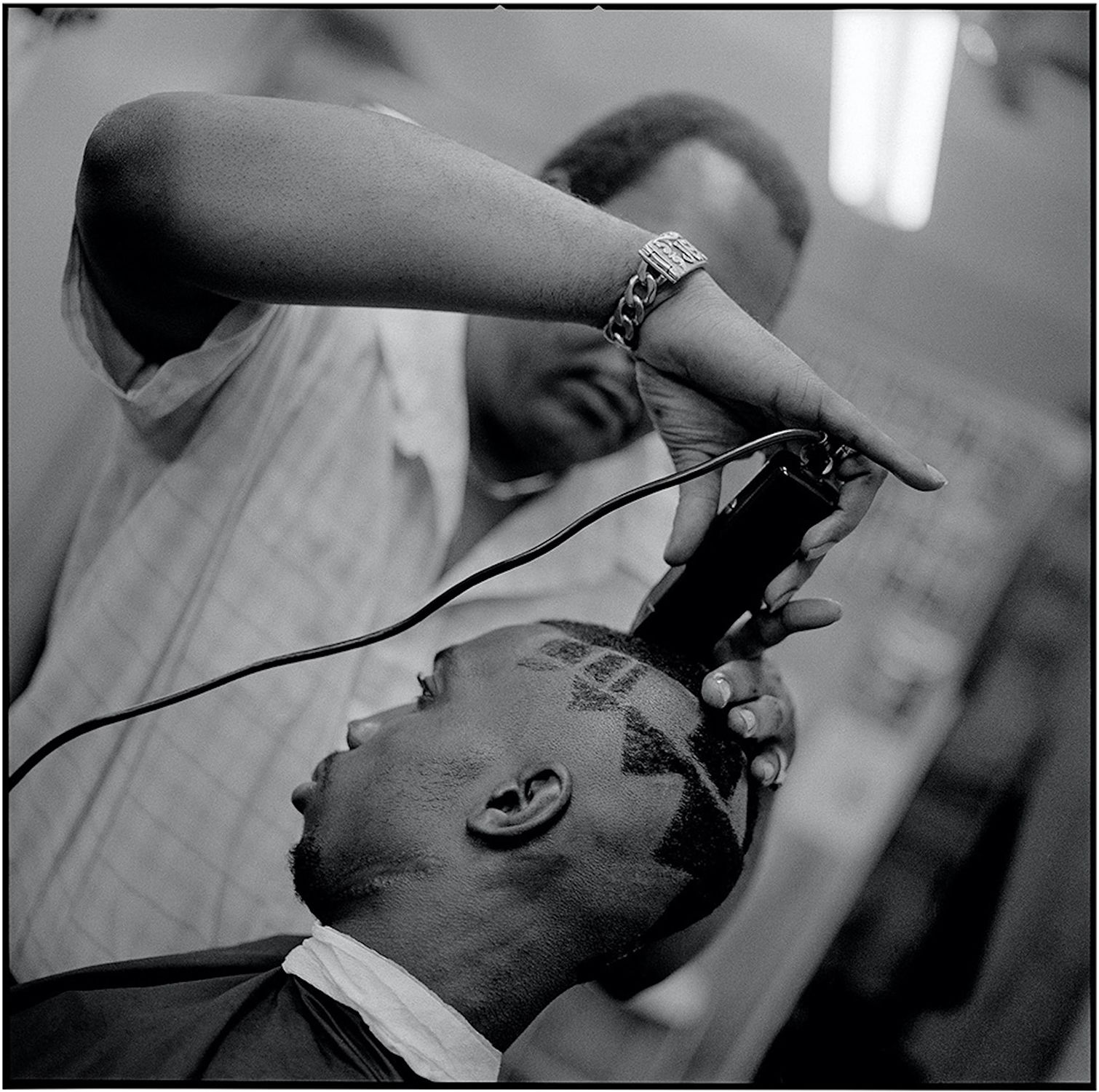
“When I moved to Harlem in 1985, along with my wife Meg and daughter Coco, I began to photograph Harlem’s streets almost every day when I wasn't working. Mostly street portraits and landscapes of the community. I had never lived in an inner-city community, and it was also my way of learning and becoming a part of this community,” photographer Jeffrey Henson Scales tells me via email. “At one point, the owner of House’s Barbershop, Mr. David House, saw me outside taking photographs and asked me if I could photograph his shop because he was in danger of losing his lease.”
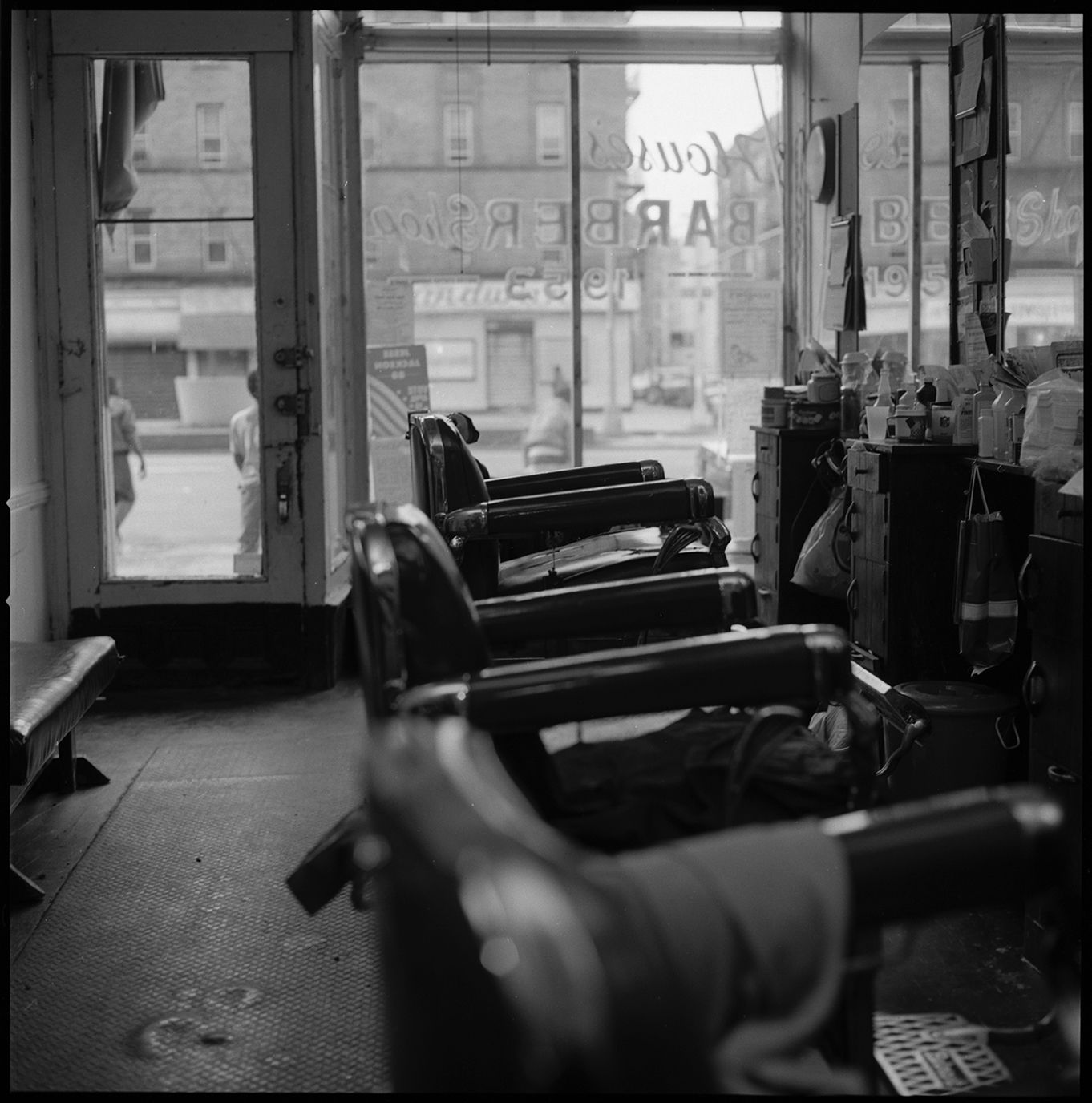
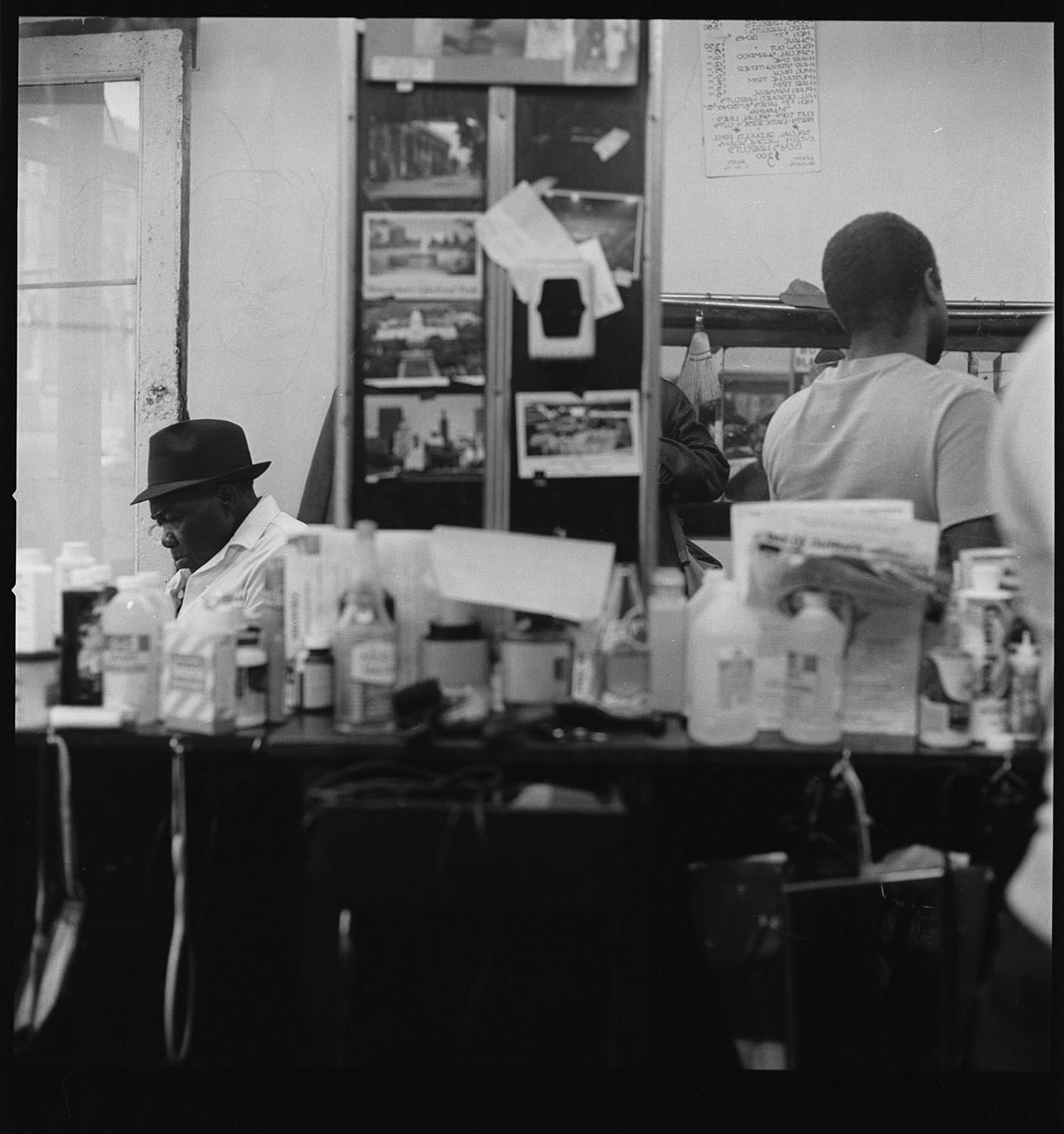
That question would lead to Scales photographing the shop for the next 6 years. The resulting body of work was first published in House, by SPQR Editions in 2016. And now those same photographs make up the exhibition Jeffrey Henson Scales: House’s Barbershop at Claire Oliver Gallery on Adam Clayton Powell, Jr. Boulevard, on view through September 20.
Scales’ career has spanned more than four decades, documenting Black history and culture. His photographs capture the richness of everyday Black life, no matter the subject, whether it’s the Black Panthers, street life, or a small local Harlem barbershop.
“Its importance to me was its own history. For 55 years, House’s Barbershop flourished, in no small part because of its half-block proximity to the legendary Minton’s Playhouse, the home of Bebop and the place where the most known and other extraordinary musicians of that era played,” Scales tells me about the shop itself. “Harlem’s bus drivers, scientists, postal workers, day laborers, writers, poets, artists, and scoundrels sat alongside musicians like Charlie Parker, Lee Morgan, Max Roach, and many others. Malcolm X even frequented House’s, it’s said, which is plausible because Malcolm’s mosque was a mere three blocks away, on Lenox and 116th.”
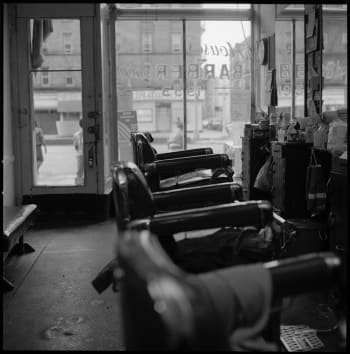
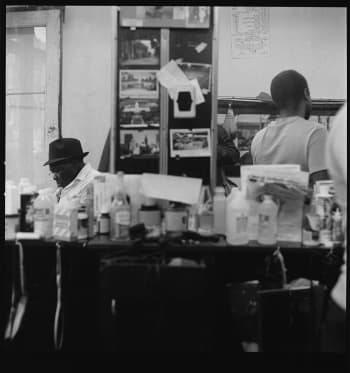
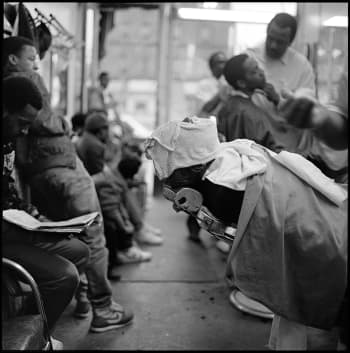
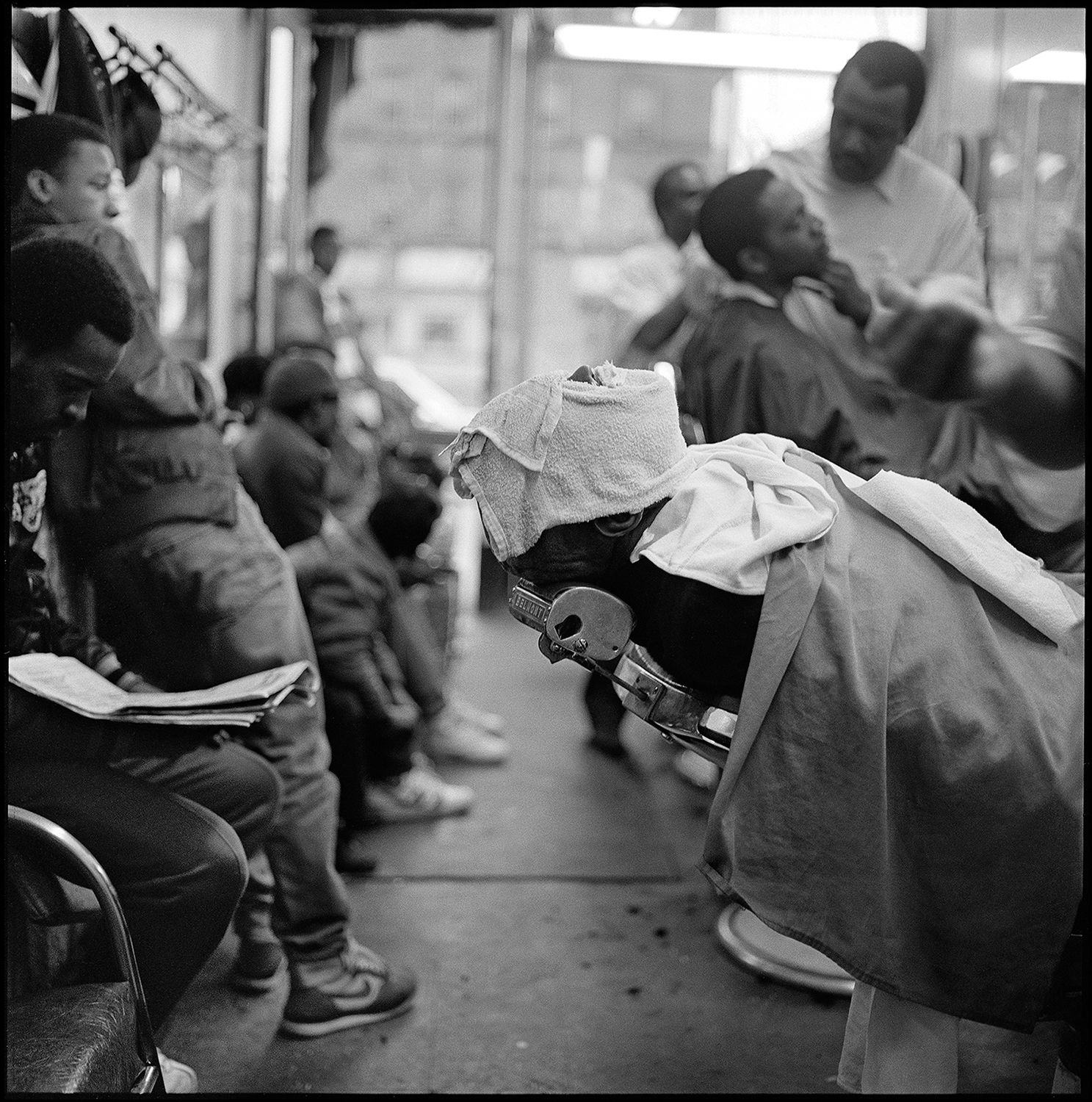
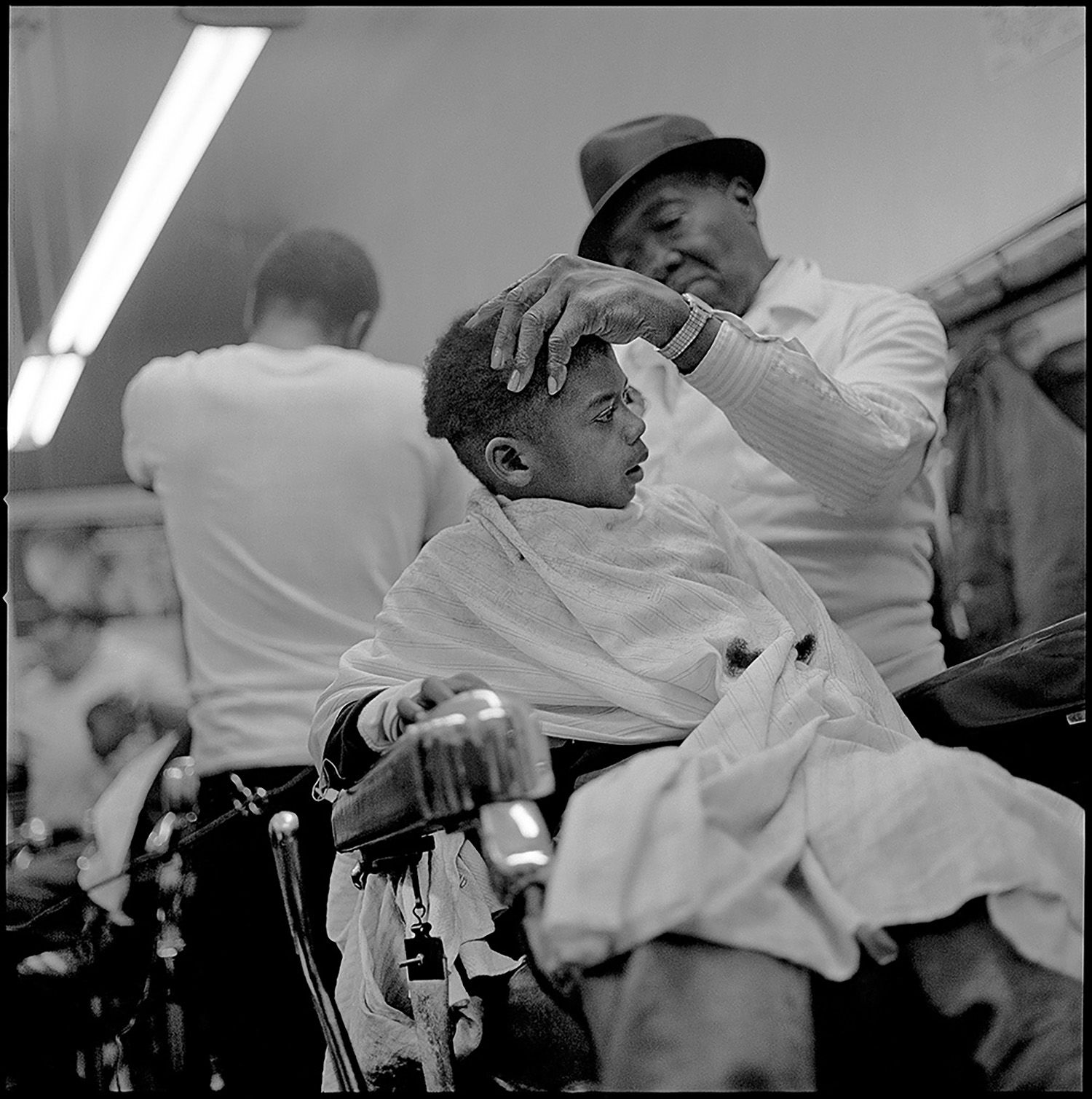
Scales photographed House’s between 1986 and 1992, at a trying time during the height of the crack epidemic, using a Hasselblad 500C/M camera which produces photographs in a square format. The large size of the negatives, compared to a 35mm camera, also allows for greater detail to be captured on the film. The tradeoff is that the camera is physically bigger, and a lot more conspicuous. People know you are taking their photograph with it. But when you look at the photographs, their intimacy is immediately apparent. They are men and boys at their most vulnerable, taking part in a ritual that is in some ways foreign to me, but amazing at the same time.
I am white, but I have spent time in Black barbershops as I have an almost 7-year-old son who is Black. We have been going to the same local barbershop in Brooklyn for years, just like the people in Scales' photographs have been. That connection, and familiarity, is something that doesn’t translate to white barbershops. I go to get my hair cut when it gets too long and raggedy. When I move, I simply find a closer shop, rather than following my barber to different shops or traveling to far-flung neighborhoods if the barber moves. It’s not a community space, but rather somewhere I go to get a service I need.
When I take my son, the community formed by those who gather there is impossible to overlook. His barber is his friend. The conversations that go on around him, and me, are personal, covering sports, politics, local gossip, and everything in between. Some people just come to hang out while their friends are in the chair to talk. During all of it the clippers glide over heads, the straight razors flash, the TV glows, and the radio plays. It's a cacophony of sounds and voices. It’s a neighborhood living room. It is community. And it is amazing to behold. When I look at Scales' photographs of House's Barbershop, I can hear it all in my mind.
That's what makes these photographs so powerful: They go beyond just showing the space — though they do — to capturing that sense of familiarity and connection that exists among those in the chairs, those waiting, and those hanging out, in this very personal space. They show that the barbershop is more than just a shop.
“The House Barbershop series invites us into a space of care, connection, and community, offering a sense of interiority that’s both specific and universal,” gallery owner and curator Claire Oliver tells me. “While conversations around representation continue, Jeffrey’s work stands apart from trends. It captures moments that are poetic and enduring snapshots of lived experience that resonate across time. His photographs matter now, just as they did years ago, and just as they will decades from now. That’s why this exhibition felt not only timely, but necessary.”
There is another importance to the photographs beyond capturing the space and people before him — they also work as a collective memory of a time and place. As Harlem itself has changed through time and gentrification, the photographs further work as a document of what was, so that it is never forgotten — and in particular with the closing of many smaller, and family-owned, shops in Harlem, that have been replaced with bigger retailers.
“I think in NYC their role is changing absolutely, as many of the older businesses are going away and more modern business models move in. Everything constantly changes in NYC, and in the twenty years since House closed the shop, I think the nature of one barbershop as a centralized gathering place for men in my Harlem neighborhood has diminished with the proliferation of more retail barbershops that have opened in this neighborhood,” said Scales.
Remembering this history is even more important today than it has ever been. With the current backlash against DEI programs, challenges to school curriculum, and the undermining of Black history by the current administration, Scales’ work offers viewers an opportunity to reflect on the political and poetic legacy of the important third places that are vital community centers.
“The rise of white supremacist ideologies having now returned to the federal government, I see that the policy decisions on the federal level [are] an attempt to erase the histories of Americans of color,” Scales tells me. “With that, for long-term residents, it’s important to see documentation of the people and history of their own community. For newcomers, it’s the same, I would submit.”
Jeffrey Henson Scales: House’s Barbershop is on view at Claire Oliver Gallery at 2288 Adam Clayton Powell, Jr. Boulevard through Sept. 20
House can be purchased from SPQR Editions through their website at spqreditions.com.
Editor's Note: An interview for this story was conducted via email between the subject and reporter.






Digital Editor: Cyril Josh Barker
 Built with Shorthand